
 By
By 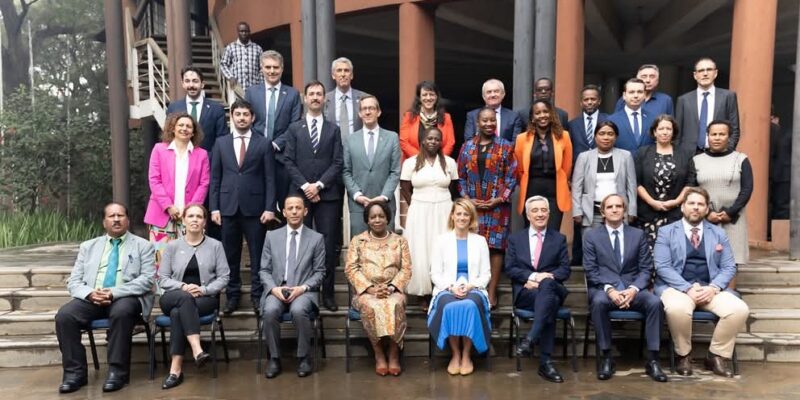
The European Union (EU) has unveiled renewed plans to support infrastructure development and regional trade integration in COMESA, highlighting the Lobito Corridor as a key project expected to transform regional commerce.
Speaking during the EU-COMESA strategic dialogue meeting held in Lusaka on Tuesday, EU Ambassador to Zambia and Special Representative to COMESA, Karolina Stasiak, said the collaboration would prioritise transport connectivity, energy transition and digital transformation in line with COMESA’s 2026–2030 Medium Term Strategic Plan.
Stasiak identified the Lobito Corridor as one of the major projects under the partnership, saying the initiative was expected to enhance trade between Zambia, the Democratic Republic of Congo and Angola through improved railway and port infrastructure.
“The project could lower transport costs by as much as 30 percent while generating thousands of employment opportunities in sectors such as logistics, agriculture and manufacturing,” he said.
According to Stasiak, the EU was prepared to support the modernisation of the corridor through investments in infrastructure, digital customs systems and environmentally sustainable logistics aimed at boosting regional competitiveness.
On the energy sector, she noted that the COMESA region held enormous renewable energy potential, including hydropower resources in Zambia, geothermal energy in Ethiopia and green hydrogen prospects in Kenya.
Read more: COMESA urges intensified resource mobilisation for AfCFTA implementation
Stasiak said investment in sustainable energy projects would help close the electricity gap in the region while promoting industrialisation, employment creation and climate resilience.
She further explained that the partnership would also focus on digital transformation by supporting the expansion of e-commerce, cybersecurity systems and financial inclusion programmes to enable small businesses, women entrepreneurs and young innovators to access regional and international markets.
Meanwhile, COMESA Secretary-General, Chileshe Kapwepwe, described the EU as one of the bloc’s key strategic and development partners.
Kapwepwe said Africa continued to face challenges arising from global economic uncertainty, geopolitical tensions, supply chain disruptions and climate-related shocks, all of which are affecting trade, investment and the cost of doing business.
She noted that disruptions along major maritime routes such as the Red Sea corridor and the Strait of Hormuz had exposed weaknesses in global supply chains and underscored the need for stronger regional integration frameworks.
Ms Kapwepwe said COMESA, which represented a market of more than 680 million people, remains strategically positioned to support implementation of the African Continental Free Trade Area (AfCFTA), strengthen regional value chains and drive industrialisation.
She stressed that regional integration remains essential in helping African economies withstand global economic shocks while pursuing sustainable long-term development.
EU Ambassador to the African Union Javier Niño Perez praised COMESA for the progress achieved in trade, infrastructure, peace and security despite difficult global conditions.
Perez said cooperation between regional economic communities, the African Union and member states remains critical in advancing Africa’s broader integration agenda.
WARNING! All rights reserved. This material, and other digital content on this website, may not be reproduced, published, broadcast, rewritten or redistributed in whole or in part without prior express permission from ZAMBIA MONITOR.




Comments