
 By
By 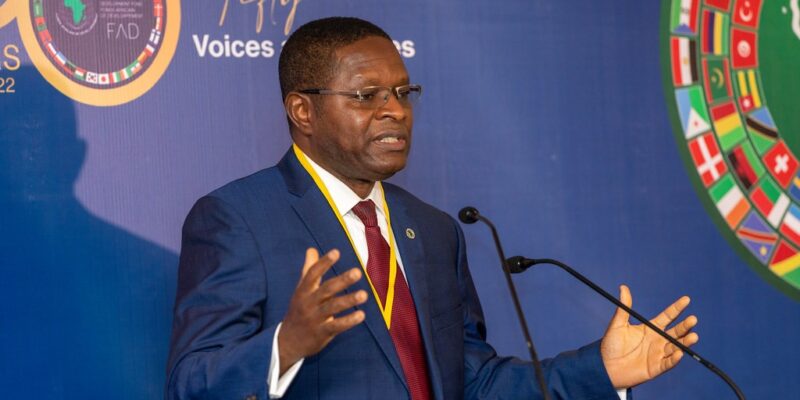
Africa’s mounting debt servicing costs are increasingly diverting resources away from critical sectors such as healthcare and infrastructure, threatening the continent’s economic growth and development prospects, the African Development Bank (AfDB) has warned.
AfDB Chief Economist and Vice-President, Kevin Urama, said the continent’s debt challenge extended beyond the size of debt stock to the rising cost of borrowing, foreign exchange risks, elevated risk premiums and inefficiencies in public investment.
Drawing on findings from the recently released 2026 African Economic Outlook Report, Urama said African countries continued to face disproportionately high borrowing costs despite maintaining one of the strongest debt repayment records globally.
“Africa’s debt stock is not necessarily a problem. The changing structure of debt, heightened risk premium, cost of debt and debt service, foreign exchange risks associated with foreign currency-denominated debt, and inefficiencies in public investment are the main challenges,” he said.
The report indicates that Africa recorded the lowest infrastructure-related default rate in the world at 1.9 percent, compared to 4.6 percent in Western Europe and Asia, 6.6 percent in North America, 10.1 percent in Latin America and 12.4 percent in Eastern Europe.
Read more: Debt relief brings fiscal breathing space but major risks lie ahead, says Economist
Despite this strong repayment performance, African countries continue to pay significantly higher borrowing costs due to what the AfDB describes as persistent mispricing of risk by international financial markets.
Prof Urama noted that the growing debt service burden was squeezing government budgets and limiting spending on essential public services.
According to the report, external public debt service consumed 31 percent of Africa’s total government revenue in 2024. Between 2022 and 2024, African countries spent an estimated US$87 billion on interest payments alone.
The report further reveals that 25 of the 51 African countries with available data spent more on debt interest payments than on healthcare between 2021 and 2023.
“Of the 51 African countries with available data, 25 spent more on interest payments than on healthcare between 2021 and 2023,” Urama said.
Beyond fiscal pressures, the report warns that high debt levels can undermine productivity and economic performance.
It estimates that a one percent increase in public debt is associated with a 4.9 percent decline in labour productivity and a 4.6 percent reduction in total factor productivity in some African economies.
The AfDB also identified major weaknesses in public investment management, with investment inefficiencies averaging 41 percent across the continent, nearly three times the global average of 14 percent.
Urama called for urgent reforms to the global debt architecture to ensure African countries can access affordable and development-oriented financing.
He also urged governments to strengthen transparency, accountability and the productive use of borrowed resources.
“For debt financing to work for growth in Africa, the current global debt architecture needs urgent reform,” he said.
Urama stressed that African countries must work collectively to advance reforms that support sustainable development and reduce the burden of costly debt.
“African countries must stand together to make debt work for sustainable development in Africa. For no one else will,” he said.
WARNING! All rights reserved. This material, and other digital content on this website, may not be reproduced, published, broadcast, rewritten or redistributed in whole or in part without prior express permission from ZAMBIA MONITOR.









Comments