
 By
By 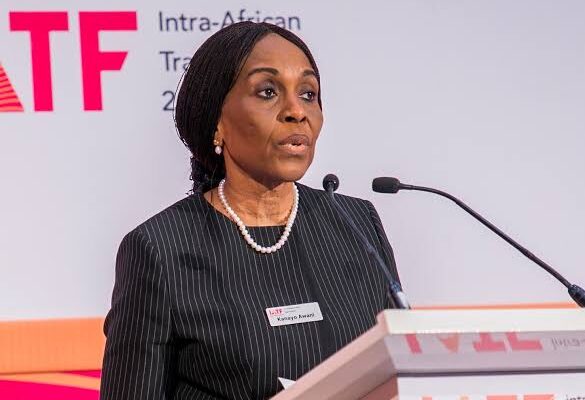
Boosting trade flows amongst African countries remains a key economic priority. There is significant opportunity to accelerate the growing intra-African trade in order to unlock investment, catalyse industrialisation, especially processing and adding value to our natural resources.
According to the Africa in Figures 2025 report released by African Export-Import Bank (Afreximbank), intra-African trade grew by 5.4 percent in 2024 to stand at US$206.6 billion, with continued implementation of the African Continental Free Trade Area (AfCFTA) expected to further enhance it. It is imperative to persist in closing long-standing gaps in trade, investment, and market intelligence that continue to constrain business growth. Across the continent, enterprises are held back by limited knowledge of market opportunities, as well as unclear regulatory information and restricted access to trade finance, all of which hamper their ambitions to expand across borders.
Enter the Intra-African Trade Fair (IATF), Africa’s premier trade and investment marketplace and a driving force behind the continent’s economic integration agenda. Building on the success of the record-breaking fourth edition, IATF2025 in Algiers, which generated US$50 billion in trade and investment deals, the Fair continues to cement its position as a catalyst for intra-African commerce. IATF’s true impact lies in its ability to connect businesses, unlock opportunities, and translate ambition into tangible commercial outcomes.
Read more: Afreximbank approves $200 million facility for Algeria oilfield project
IATF2025 highlighted the growing momentum of trade within Africa, with significant increases in participation, deal volume and transaction value. More than a showcase, the Fair proved its effectiveness as a platform for expanding market access, promoting African products and services, attracting investment, and connecting businesses to new opportunities. It continues to deliver tangible results by facilitating partnerships, fostering and strengthening regional and continental value chains.
IATF has firmly established itself as one of Africa’s most influential engines for trade, investment and economic integration. The spotlight now shifts to Nigeria. Lagos will host IATF2027 from 5–11 November 2027, bringing together businesses, investors, policymakers, researchers, creatives and innovators from across the continent. The ambition for the 2027 edition in Lagos reflects the sheer scale of Africa’s opportunity. With targets of over US$50 billion in trade and investment deals, more than 100,000 visitors, and 2,500+ exhibitors, IATF2027 is set to be the largest edition yet.
Anchored by the theme “Global Africa, Smart Trade: From Market Access to Market Power,” it signals a bold shift, positioning Africa not just as a participant, but as a decisive force shaping its own economic future.
Beyond the headline figure, more than 180,000 participants, 6,600 exhibitors from 132 countries, and over US$167 billion in cumulative trade and investment deals across its first four editions the message is clear: African businesses are ready to scale, compete, and lead, and the continent is rich with opportunity. The real constraint is not demand, but access specifically, the need for structured and efficient pathways that enable businesses to identify opportunities, connect with the right partners, and execute transactions at scale. IATF is at the forefront of breaking down these barriers and unlocking Africa’s full trade potential.
According to, ‘The Impact of the Intra-African Trade Fair (IATF) on Development and Trade, 2018–2024’ report, an impressive 62.4 percent of concluded deals directly supported intra-African trade, amounting to more than US$8.5 billion for each edition of the trade fair since 2018. Nearly 360,000 small businesses and SMEs are benefitting, including thousands of women and youth-led enterprises. The positive impact on employment is also significant. For every US$1 million invested into IATF, roughly 42 jobs are created – meaning each fair supports more than half a million direct employment opportunities across the continent. What this tells us is that Africa’s challenge is not capacity but connecting with each other. The priority for the continent in sustaining the trade and investment momentum is ensuring businesses continue to access the intelligence, partnerships, and support systems they need.
This is why platforms like IATF Virtual, designed to keep engagements amongst businesses alive, maintain visibility for exhibitors, enable governments and corporates to follow up on leads, and support year-round dialogue across sectors matter. The platform has potential to serve as the continent’s permanent marketplace. For SMEs that often face cost, travel, and logistics barriers, such platforms bridge these issues.
As Nigeria prepares to host IATF2027, it could not be timelier. The country is central to the AfCFTA’s success, not just because of its market size, but due to its vast resource base and industrial potential. As a leading producer of oil and gas, solid minerals, including lithium, iron ore, and gold so critical to future value chains, and key agricultural commodities, Nigeria is uniquely positioned to drive the industrialisation the continent needs.
It is essential for Nigerian and African businesses to fully seize opportunities presented by the continental free trade area. The good news is that the continent is already moving in the direction of addressing this. In Nigeria, for example, capacity-building programmes, export readiness clinics, certification support and partnerships with institutions like the Nigerian Export Promotion Council and the Small and Medium Enterprises Development Agency of Nigeria are helping equip SMEs with the knowledge and tools needed to trade across African borders. Lagos State, for instance, is strengthening foundations for success from investments in the Lekki Deep Sea Port and logistics corridors, to the development of industrial clusters and support through business development hubs.
Looking ahead, the message is clear. Africa is primed and ready to increase intra-African trade, but momentum must not be lost. The continent has showcased the concept, proven there’s appetite, and seen the results. With one of Africa’s largest economies and most populous nation now hosting the continent’s biggest marketplace, the challenge is to transform the current success into exponential progress.
The author is the Executive Vice-President, Intra-African Trade & Export Development Bank at African Export-Import Bank (Afreximbank).
WARNING! All rights reserved. This material, and other digital content on this website, may not be reproduced, published, broadcast, rewritten or redistributed in whole or in part without prior express permission from ZAMBIA MONITOR.











Comments