
 By
By 
Zambia needs to accelerate investment in solar power, electricity transmission and distribution networks to support economic transformation over the next five years, Stanbic Bank Zambia Chief Executive, Mwindwa Siakalima has said.
Siakalima said energy was the most important enabling sector for Zambia’s economic development, with increased electricity generation and stronger networks needed to support growth in sectors such as agriculture, mining and manufacturing.
“Energy is key,” Siakalima said. “We’re actually seeing energy as the largest single most important dependent or dependency sector that we need to enhance.”
Read more: Stanbic Bank calls for borderless African power market to support Zambia’s growth
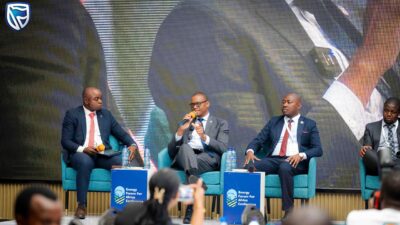
Siakalima said this during a panel discussion on Mobilizing Capital for Cross-Border Energy Projects: From Vision to Bankable Deals at the ongoing Energy Forum for Africa Conference in Lusaka.
Zambia currently has about 4,700 megawatts of installed power generation capacity, while the country’s longer-term requirement is more than 10,000 MW, he said.
Siakalima said solar power should remain a major focus of investment, noting that Zambia had added about 1,000 MW of solar generation capacity over the past year.
He added that the next phase of investment should focus not only on adding generation capacity but also on ensuring that the electricity grid could absorb and distribute the additional power.
“We also need to work on the grid,” he said, highlighting the need to strengthen transmission infrastructure and improve the resilience of the distribution network.
The expansion of transmission infrastructure would also be important for Zambia’s ability to move electricity within the country and support future power exports, he said.
Siakalima cautioned that increasing generation without strengthening distribution networks could result in power being lost because of inadequate infrastructure.
He also called for greater investment in off-grid electricity solutions, particularly in rural areas where extending the national grid could take longer.
Such systems could help provide electricity to emerging agricultural areas and farming blocks while larger transmission and distribution projects are being developed, he said.
“How do we develop those before the power gets there?” Siakalima said, referring to areas where new agricultural activity is being developed.
He said smaller-scale power solutions could help open up those areas to economic activity ahead of the arrival of grid electricity.
Siakalima noted that Zambia’s recent policy and regulatory reforms had helped create a more favourable environment for investment in the energy sector, and called for the momentum to continue.
The investments in solar generation, transmission, distribution and off-grid solutions would collectively help provide the electricity infrastructure needed to support Zambia’s broader economic ambitions over the next five years, he said.
WARNING! All rights reserved. This material, and other digital content on this website, may not be reproduced, published, broadcast, rewritten or redistributed in whole or in part without prior express permission from ZAMBIA MONITOR.








Comments