
 By
By 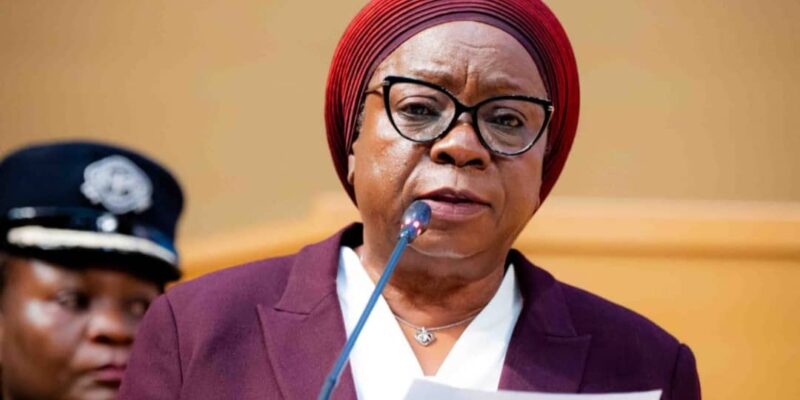
Zambia has urged private investors and development partners to increase investment in electricity transmission and distribution, warning that inadequate infrastructure could undermine the country’s growing power generation capacity.
Vice President, Mutale Nalumango, said Zambia had made significant progress in expanding generation capacity but needed to strengthen the grid to ensure new power could reach consumers and productive sectors.
“ I must emphasize that although we have recorded positive things and investments in the generations, transmission and distribution space is lagging behind,” Nalumango said.
She was speaking on Wednesday when she officially opened the third edition of the Energy Forum for Africa at the Mulungushi International Conference Centre in Lusaka.
Nalumango said Zambia’s installed generation capacity had increased from 3,777 megawatts in 2024 to 4,722.3 MW, while solar capacity had risen from 178 MW to 1,027.5 MW.
She said solar capacity had already surpassed the government’s 1,000 MW target for 2026 and now accounted for 21.76% of installed generation capacity.
The Vice President called on cooperating partners and the private sector to prioritise investment in transmission and distribution infrastructure to support the evacuation of power from new generation projects.
“I therefore call upon corporate partners, the private sector and all of us to prioritize investment in this area so as to support power evacuation from the new investment in generation,” Nalumango said.
She said the expansion of the electricity system was critical to achieving the government’s Grow Zambia Agenda, which includes targets of 10 million tonnes of maize, 10,000 MW of electricity generation, five million tourist arrivals, three million tonnes of copper, three million tonnes of soya beans, one million tonnes of wheat, one million tonnes of sugar and US$1 billion in beef export revenue.
“The task before the energy sector is to build the power system that makes that vision possible. Ten thousand megawatts of electricity generation is not the end of the journey. It is an enabler of the other national targets,” she said.
Nalumango said the 10,000 MW electricity target was intended to support irrigation and agro-processing, mineral production and value addition, tourism, manufacturing and wider access to electricity.
She said government, working with the private sector and development partners, had a responsibility to create the policy, regulatory and investment environment needed to develop energy infrastructure efficiently.
“Our energy strategy must be measured not only by megawatts added to the grid but also by the economic activity those megawatts enable,” Nalumango said.
She also called for greater regional integration of energy infrastructure, saying Africa’s energy transition presented opportunities beyond individual national markets.
“Our vision must be a borderless energy future for Africa. One where electricity does not stop at a national border, where our energy resources are shared to support shared prosperity and where countries work together to power the Africa we want,” she said.
Nalumango said Zambia was moving from economic stabilisation towards growth and the energy sector needed to support that transition by strengthening the grid and ensuring new generation capacity contributed to productive economic activity.
Energy Forum for Africa Convenor, Hope Chanda, said projects presented at the forum last year had progressed to implementation and now represented about 700 MW of solar power towards a 1,000 MW target.
“These are not figures on the slide. They are real plants, real jobs, real investments and above all real electricity for homes, for hospitals, for schools, for industries across our region,” Chanda said.
Read More: Stanbic Bank calls for borderless African power market to support Zambia’s growth
She said the forum’s focus had shifted from identifying investment opportunities and unlocking capital to connecting energy opportunities across national borders.
“Having identified the opportunities how do we connect them? How do we build an energy system where power, fuel and capital move across our borders freely as people, our traders and our ambitions? That is why we have chosen the theme driving a borderless energy future for Africa,” Chanda said.
She said energy did not recognise borders and called for policies, grids and infrastructure to treat national borders as bridges rather than barriers to regional energy development.
“The Energy Forum for Africa was never meant to be a talking shop and its goal has been to move projects from showcase to implementation,” Chanda said.
She said progress had been supported by reforms in Zambia that had opened the power sector to private investment, introduced competitive procurement and strengthened the framework for independent power producers.
The Energy Forum for Africa is being held in Lusaka from Oct. 7 to 9 under the theme “Driving a Borderless Energy Future for Africa”.
Stanbic Bank Zambia, Petrodex Energy Trading and Zambezi River Authority are Platinum sponsors of the conference.
WARNING! All rights reserved. This material, and other digital content on this website, may not be reproduced, published, broadcast, rewritten or redistributed in whole or in part without prior express permission from ZAMBIA MONITOR.









Comments