
 By
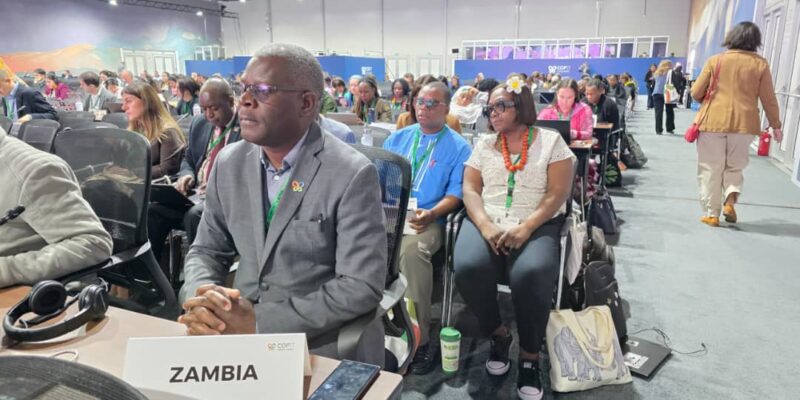
Government has reaffirmed its commitment to biodiversity conservation, biosafety and the fair sharing of benefits arising from genetic resources through its participation in the 17th Conference of the Parties (COP17) to the United Nations Convention on Biological Diversity.
The conference, which also included the 12th Meeting of the Parties to the Cartagena Protocol on Biosafety (CP-MOP12) and the 6th Meeting of the Parties to the Nagoya Protocol (NP-MOP6), was held in Yerevan, Armenia, from October 19 to 30, 2026, under the theme “Taking Action for Nature”.
COP17 marked the first global review of collective progress towards implementing the Kunming-Montreal Global Biodiversity Framework (KMGBF), adopted in 2022.
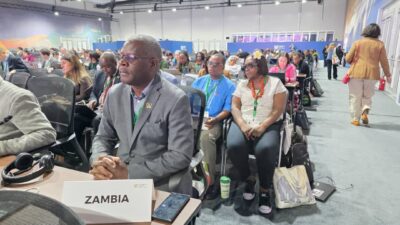
The Zambian delegation was led by Acting Permanent Secretary in the Ministry of Lands and Natural Resources, Kasonde Henry Mwila, who also attended the Ministerial High-Level Segment convened by the Government of Armenia on October 27 and 28, 2026.
Speaking at the conclusion of the conference, Mwila described the meetings as successful and a valuable platform for discussing biodiversity and biosafety issues, exchanging experiences and strengthening international cooperation.
“The just-ended COP17 was an important and worthwhile meeting. Having participated in the meetings, I believe they were very beneficial, particularly in providing opportunities to establish partnerships and explore avenues for financial and technical collaboration,” he said.
According to the State of Biodiversity Action report presented at COP17, nearly 90 percent of countries have set biodiversity targets, close to 60 percent have developed National Biodiversity Strategies and Action Plans (NBSAPs), while more than 70 percent have submitted national reports.
However, less than half of the assessed targets are on track due to gaps in financing, institutional capacity, monitoring and data.
Under the Cartagena Protocol on Biosafety, Parties agreed to establish an Ad Hoc Technical Expert Group to develop supplementary voluntary guidance on risk assessment of living modified fish.
“Zambia emphasised the need to strengthen laboratory infrastructure, access to equipment and reagents, and technical expertise to effectively detect and identify Living Modified Organisms (LMOs),” he said.
On the Nagoya Protocol, Mwila said discussions highlighted the importance of effective national implementation and fair and equitable benefit-sharing, particularly for biodiversity-rich countries such as Zambia.
Financing also featured prominently, with more than US$1.8 billion in new biodiversity financing commitments announced, including approximately US$500 million for species recovery.
Discussions further called for increased financing for developing countries, private-sector investment, reform of harmful subsidies and fair benefit-sharing through the Cali Fund.
The COP17 Presidency launched four flagship initiatives: the Yerevan Platform on Mountains and Related Freshwater Ecosystems, the Global Action Platform on Other Effective Area-Based Conservation Measures (OECMs), the Yerevan Technology Platform for Biodiversity Monitoring and the Yerevan Call on Incentives Positive to Biodiversity.
Mwila also welcomed the US$50,000 award secured through the High Ambition Coalition for Nature and People to strengthen the management of the Busanga Swamps in the Kasonso-Busanga Game Management Area.
“The funding will support wetland mapping and conservation assessments to improve wildlife protection, ecological connectivity, tourism and community livelihoods,” he said.
The delegation also held strategic meetings with the NBSAP Accelerator Partnership and the World Wide Fund for Nature (WWF) to explore Zambia’s potential participation in an initiative that provides capacity-building, financial support and technical assistance.
Mwila said joining the initiative could accelerate the implementation of Zambia’s Third National Biodiversity Strategy and Action Plan (2026–2035).
“Zambia will draw on these outcomes to strengthen the management of national parks, game management areas and wetlands, build biosafety and laboratory capacity and improve access and benefit-sharing arrangements,” he said.
The conference brought together Parties, international organisations, development partners, scientists, civil society organisations and Indigenous Peoples.
Ecuador has been named host of COP18 in 2028.
WARNING! All rights reserved. This material, and other digital content on this website, may not be reproduced, published, broadcast, rewritten or redistributed in whole or in part without prior express permission from ZAMBIA MONITOR.




Comments