
 By
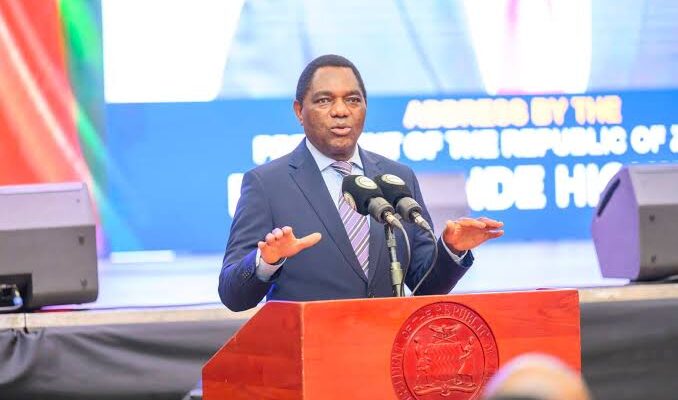
President, Hakainde Hichilema, has called for a shift from exporting raw commodities to value-added production, saying Zambia must leverage opportunities in agriculture, energy and mining to accelerate industrialisation and expand its export markets.
Hichilema said although the country had made progress in restoring macroeconomic stability and investor confidence through economic reforms, the next phase of its economic transformation should focus on increased production, manufacturing and export-led growth.
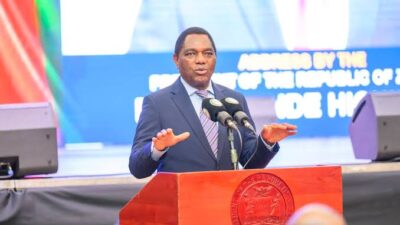
Speaking at the Third Zambia Commodities Market Outlook Conference in Lusaka on Monday, he said Zambia should position itself as a competitive regional hub for manufacturing, value addition and international trade.
“Having laid the foundation for macroeconomic stability, our focus must now shift decisively towards increased production, industrialisation, value addition and export-led growth,” he said in a speech read on his behalf by Trade and Export Minister Dr Caroline Kaunda Katotobe.
Hichilema observed that African countries had for too long participated in global commodity markets mainly as suppliers of raw materials, while much of the value generated through processing, manufacturing and international trade accrued elsewhere.
He said Zambia’s Grow Zambia agenda was aimed at changing this trend by strengthening productive sectors and ensuring the country benefited more from its natural and agricultural resources.
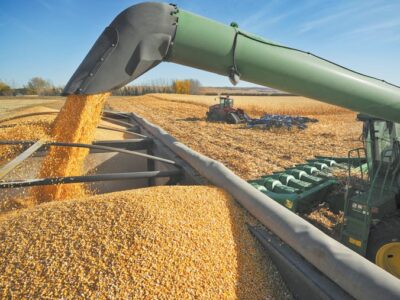
On agriculture, Hichilema said the country’s annual production targets of 10 million tonnes of maize, three million tonnes of soya beans, and one million tonnes each of wheat and sugar were intended to position Zambia as a regional food basket and agro-processing hub.
He said the targets presented significant opportunities, particularly given Africa’s continued reliance on imports of agricultural commodities and processed food products despite having the capacity to produce them locally.
“It would be rather ironic for Africa to continue importing what its own farmers can competitively produce, while those same farmers struggle to find markets,” he said.
Hichilema said Zambia viewed other African countries not merely as export destinations but as strategic partners in building an integrated, resilient and food-secure continent.
He said climate change, unpredictable weather patterns and global supply disruptions made regional trade and cooperation increasingly important.
On energy, the president said Zambia was targeting 10,000 megawatts of electricity-generation capacity, noting that the ambition went beyond increasing supply to powering industries and strengthening the country’s regional competitiveness.
He said reliable and competitively priced electricity was critical to expanding irrigation, agro-processing, mining and manufacturing.
Hichilema added that surplus electricity, after meeting domestic demand, could create opportunities for exports through the Southern African Power Pool (SAPP) and other regional markets.
He said investments in strategic infrastructure, particularly electricity interconnectors, would further strengthen regional power trade and open up wider markets.
On mining, Hichilema reiterated Zambia’s ambition to increase annual copper production to three million tonnes, saying this would provide a foundation for expanding exports to China, India, the European Union, the United States and the United Arab Emirates.
He said government was seeking to attract investment into mineral processing and the manufacture of copper rods, wires, cables and electrical components to enable the country to participate more meaningfully in global energy and industrial supply chains.
Hichilema said the Ministry of Industry and the Zambia Development Agency would play a key role in attracting investments into these activities.
He also highlighted the role of the newly established Ministry of Trade and Exports in positioning Zambia to take advantage of emerging regional and international trade opportunities.
He said government would prioritise securing market access, removing trade barriers, strengthening export development councils, promoting value-added exports and improving trade facilitation.
“The significance of this gathering lies not merely in discussing commodity market trends, but in translating emerging opportunities into concrete investments, increased production, value addition and expanded trade,” he said.
Hichilema said Zambia was determined to ensure that increased production translated into higher exports, job creation and improved livelihoods.
Read More: Zambia proposes record K284.8 billion 2027 budget, as focus turns to growth
“Zambia is ready to produce more, add greater value and trade more competitively. The markets and opportunities exist, our collective responsibility is to seize them,” he said.
The conference, organised by the French Business Circle and its partners, brought together policymakers, investors, industry leaders and experts to discuss developments in global commodity markets and their implications for Zambia’s economic transformation.
Speaking at the same event, French Business Circle has called for stronger partnerships between Government and the private sector to accelerate investment, industrial development and Zambia’s participation in regional and international markets.
The Circle’s Founder and Executive Director, Eric Rambeloson, said the country’s agricultural potential, strategic position and growing role in supplying critical minerals presented opportunities amid global economic shifts.
However, he said natural resources alone could not guarantee prosperity without investment in infrastructure, reliable and affordable energy, sound policies and sustained dialogue between the public and private sectors.
WARNING! All rights reserved. This material, and other digital content on this website, may not be reproduced, published, broadcast, rewritten or redistributed in whole or in part without prior express permission from ZAMBIA MONITOR.






Comments