
 By
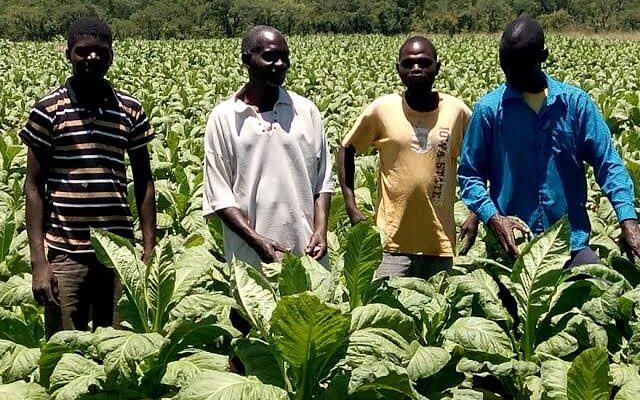
Contract dependence is reducing tobacco farmers’ bargaining power in Zambia, trapping them in cycles of debt and exposing them to price fluctuations, according to a new advocacy brief.
More than 72 percent of tobacco farmers in Zambia are tied to contracts that generate average losses of US$200 per acre before family labour is factored in, the brief said, citing United Nations Development Programme data.
The brief, released in Lusaka on Wednesday by the Centre for Trade Policy and Development (CTPD), argues that tobacco’s economic contribution is overstated, while its wider health, economic, social and environmental costs are overlooked.
It was developed by Leonce Sessou and Robinson Nakambo, with contributions from colleagues and partners, and acknowledges the Tobacco Control Consortium of Zambia for its leadership and contextual insights.
“The tobacco industry often exaggerates its economic contribution to portray tobacco as essential to Zambia development, while downplaying the sector’s wider health, economic, social, and environmental costs,” the report said.
In 2024, tobacco production accounted for 1.73 percent of Zambia’s total exports, valued at approximately US$194.08 million. However, the country’s annual economic cost associated with tobacco is estimated at US$120.2 million, equivalent to 61.9 percent of gross tobacco exports, the brief said.
“Contract dependence also reduces farmers’ bargaining power, locking them into cycles of debt and vulnerability to price fluctuations,” the report said.
The brief said tobacco contributes just 0.4 percent to Zambia’s gross domestic product (GDP) and generates highly volatile net trade benefits.
It also linked tobacco to 7,142 deaths annually, 104,611 years of life lost and a youth tobacco prevalence rate of 8.7 percent.
Read More: Tobacco firms use covert tactics to influence policy in Africa, journalists told
These findings, the brief said, highlight tobacco not only as a health and economic burden but also as an environmental threat that undermines Zambia’s long-term agricultural sustainability.
Tobacco cultivation occupies approximately 59,000 hectares of land and contributes to annual deforestation rates of between 3 and 4 percent, while displacing food crops.
Child labour also remains a major concern, with tobacco identified as one of the most hazardous sectors for children. The brief further raised concerns over high levels of tobacco use among young people.
To address these challenges, the brief recommends policies aligned with the World Health Organization (WHO) Framework Convention on Tobacco Control, alongside crop substitution and livelihood diversification programmes.
It also calls for stronger forest monitoring, increased labour inspections in tobacco-growing areas and measures to connect farming communities with markets for viable alternative crops.
“Tobacco is no longer a golden crop for Zambia once its full costs to health, land and livelihoods are counted,” the report said.
WARNING! All rights reserved. This material, and other digital content on this website, may not be reproduced, published, broadcast, rewritten or redistributed in whole or in part without prior express permission from ZAMBIA MONITOR.











Comments