
 By
By 
Stanbic Bank is working with state power utility ZESCO and energy intermediary Africa GreenCo on ZamWatt, a platform designed to address financing and bankability challenges facing electricity projects by linking multiple power producers with commercial and industrial buyers.
The ZamWatt programme aims to facilitate the financing of 18 renewable energy projects with a combined installed capacity of about 1,000 megawatts (MW), helping diversify Zambia’s electricity supply and reduce dependence on hydropower.
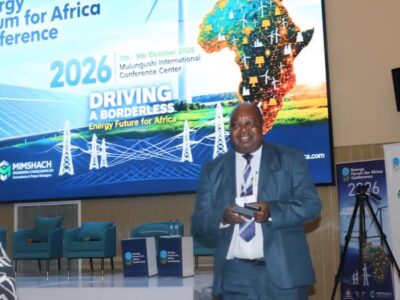
According to a presentation at the Energy Forum for Africa conference in Lusaka, the portfolio comprises 13 solar projects, four hydropower projects and one wind project.
The projects are expected to generate about two terawatt-hours (TWh) of renewable electricity annually, with approximately 280 MW equivalent of firm baseload supply.
Read more: Stanbic CEO sees solar, grid investment as key to Zambia’s economic transformation
Stanbic Bank Zambia Senior Vice President for Energy and Infrastructure, David Chanda, said the initiative was developed in response to challenges in Zambia’s energy sector and across the region, including difficulties securing financing, finding reliable electricity buyers and reducing investment risks.
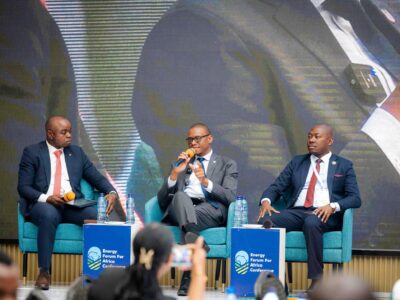
Speaking during a presentation on how the platform works at the conference on Thursday, Chanda said ZamWatt would bring together independent power producers (IPPs), electricity off-takers and financial services providers to support the development of multiple generation projects.
He said Zambia’s heavy dependence on hydropower had exposed the electricity sector to climate-related risks, particularly during the severe drought that reduced generation in 2024.
“Some of the challenges outstanding back at Stanbic, we have had a lot of experience in the sector and there are some common themes in terms of challenges that keep coming in the sector,” Chanda said.
“Of course, specifically, Zambia, over 80% is dependent on hydropower. We saw the cost of that in 2024 when we were hit by one of the worst droughts,” he said.
The presentation put hydropower’s share of Zambia’s installed electricity generation capacity at 81% and highlighted the need to diversify supply as the country faces continuing electricity shortages. It also cited a generation deficit of about 700 MW in 2025.
Chanda said the bankability of energy projects remained another major constraint, affecting developers’ ability to secure financing to move projects from planning to implementation.
The presentation noted that only about 20% of energy projects in sub-Saharan Africa reach bankability, with Zambia’s failure rate potentially higher.
He said developers also faced challenges in securing reliable off-takers, particularly when projects were designed around the assumption that ZESCO would purchase all the electricity generated.
“A lot of projects start up with the frame idea that they’ll be looking to sell the power to ZESCO, and that also is a big problem because not everybody who wants to sell that power can sell to ZESCO,” Chanda said.
He said the development of an open-access electricity market in Zambia provided opportunities for generators to explore alternative buyers, including mining companies and other commercial and industrial consumers.
Under the ZamWatt model, multiple generation projects would be connected to several off-takers, reducing dependence on a single electricity buyer and spreading risks across the portfolio.
Chanda said the generation side would accommodate different technologies, including solar, wind, hydropower and battery storage at selected sites, while the off-taker side would comprise commercial and industrial customers, including mines.
Under the proposed arrangement, GreenCo would act as the operational service agent and licensed Southern African Power Pool (SAPP) trader, managing scheduling, nominations, metering and dispatch of the storage fleet.
ZESCO would provide grid-related services, including wheeling, energy banking and system operation, while making its transmission infrastructure available to facilitate the movement of electricity. The presentation also identified ZESCO as an off-taker for 30% of the portfolio.
Stanbic Bank would serve as the mandated lead arranger and payment agent, facilitating a single settlement flow for the 18 projects and their customers.
Chanda said the arrangement was intended to strengthen the reliability of transactions by linking several generators to multiple off-takers.
“So in this case, we are de-risking the projects on both sides,” he said, explaining that the failure of one project or buyer would not necessarily undermine the entire arrangement.
He said the approach could help address some of the risks that had traditionally made energy projects difficult to finance, while supporting Zambia’s efforts to expand electricity generation and diversify its energy mix.
The presentation showed that the programme had progressed from a tripartite memorandum of understanding signed by GreenCo, ZESCO and Stanbic Bank in March 2026 to a public launch in May.
Legal counsel was engaged in April, with project documentation drafted and independent power producers signing up in June. As of September, the partners were negotiating project documents, while work was continuing on identifying suitable sites with ZESCO, the Ministry of Energy and off-takers.
The partners expect the projects to reach financial close in 2027, with the remaining financing expected to be completed during the year. The full portfolio is targeted to come online by 2030.
The programme also includes plans to design and finance battery storage to support electricity supply and the integration of renewable energy into the national grid.
The ZamWatt initiative comes as Zambia seeks to attract private investment into electricity generation and reduce its vulnerability to hydropower shortages following the 2024 drought. The programme’s targeted 1,000 MW of private generation is also intended to support the government’s Grow Zambia Agenda, with the presentation citing an electricity demand requirement of 8,000 MW to support copper production of three million tonnes annually by 2031.
WARNING! All rights reserved. This material, and other digital content on this website, may not be reproduced, published, broadcast, rewritten or redistributed in whole or in part without prior express permission from ZAMBIA MONITOR.







Comments