
 By
By 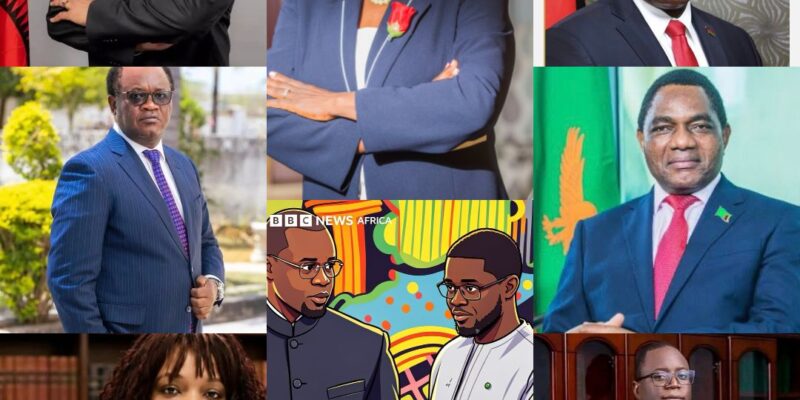
In the sun-dusted streets of Dakar in 2024, a chant rose up that became more than a slogan. It was a promise. ‘Diomaye moy Sonko’: Diomaye is Sonko. For millions of Senegalese, those four words captured a revolution in the making.
Bassirou Diomaye Faye and Ousmane Sonko were not just two men; they were a single political force, bound by a pact forged in opposition, hardship, and a shared determination to break the grip of Senegal’s old ruling elite.
Sonko, the charismatic firebrand barred from running by a court conviction, handed the torch to his loyal lieutenant Faye.
The deal was simple: Faye would stand, they would win together, and upon taking power, Sonko would become Prime Minister, governing side by side as equals.
For a brief, hopeful season, it worked. They swept to victory, ending twelve years of rule, and Senegal held its breath, watching this bold experiment in shared leadership unfold. But by May 2026, the magic had evaporated.
President Faye dismissed Prime Minister Sonko, dissolved the government, and shattered the alliance that had carried them to the summit. What began as a union of purpose had become a collision of wills, ideology, and the unforgiving reality of governing a nation burdened by debt and fragile economics.
It is a story as old as politics itself: pacts are beautiful in promise, but dangerous in practice. They are alliances built on necessity, often between leaders who need one another to win, yet who carry within them different ambitions, different interpretations of the truth, and different ideas of what ‘victory’ actually means.
History teaches us that power-sharing agreements are high wire acts, performed without a safety net, where one misstep can bring down not just the leaders involved, but the hopes of a whole nation.
When Trust Turns to Rivalry: Senegal’s Unravelling
The Senegalese pact was born from adversity. Sonko, the undisputed leader of the PASTEF movement, had been blocked from the ballot box, a move his supporters saw as political sabotage.
He turned to Faye, his quiet, disciplined right-hand man, trusting him to carry their manifesto forward. In return, Faye understood that his legitimacy came almost entirely from Sonko’s immense popularity and grassroots support. Together, they campaigned as one body and one soul.
But governing is not campaigning. Once in office, the cracks began to show. Senegal faced a hidden debt crisis that pushed public liabilities to over 130 per cent of GDP; the International Monetary Fund froze funding, and hard choices had to be made.
Here lay the fatal divide: Sonko remained the uncompromising ideologue, refusing any deal with international lenders he called ‘neocolonial’, rejecting subsidy cuts, and insisting on absolute economic sovereignty.
Faye, meanwhile, became the pragmatist, realising that principle without stability was a recipe for collapse. He began to negotiate, to compromise, to govern. These actions were denounced by Sonko as betrayal of their revolution.
Before long, there were two centres of power in Dakar: the Presidency and the Prime Minister’s office, each pulling in different directions. Sonko skipped cabinet meetings, criticised his leader openly, and built his own political machine, positioning himself for the 2029 election.
Faye, realising that co-governance had become counter-governance, acted decisively. The pact was dead, not because of bad faith alone, but because two men who once agreed on what they were against could no longer agree on what they were for.
A Pattern Repeated: From Lilongwe to Lusaka
Senegal’s story is far from unique. Across Africa, and indeed across the world, power-sharing pacts have followed the same tragic arc: unity in opposition, fracture in power.
Take Malawi, where the pact between President Lazarus Chakwera and his running mate turned ally Saulos Chilima promised to heal a divided nation after the historic 2020 election victory.
United by a desire to overturn a disputed result and end years of economic decline, they campaigned on a message of ‘Tonse’ ‘All of us together’. Yet within two years, the alliance frayed.
Chilima, a charismatic and ambitious leader with a strong base, found himself sidelined, his influence curbed, his policy proposals ignored. What began as a partnership of equals evolved into a battle for dominance. By 2022, Chilima was openly criticising the government he served, and by 2024, he was back on the campaign trail as an opponent.
The pact had served its purpose: to win power. But once inside State House, there was no longer enough room for two stars. Many believe that it was that brutal alliance break up that led to the untimely tragic death of chilima.
We see the same political divorce pattern elsewhere. In Kenya, the 2008 power-sharing deal between Mwai Kibaki and Raila Odinga stopped bloodshed after a disputed election, but it was marked by constant friction, competing interests, and a slow erosion of trust, ending in bitter separation before the next vote.
In Zimbabwe, the 2009 Government of National Unity brought Morgan Tsvangirai and Robert Mugabe together, but it was always an unhappy marriage: one side holding onto power, the other trying to reform a system designed to resist change. It lasted just four years, leaving behind a legacy of disappointment.
These failures share a common truth, pacts are built on the assumption that shared goals mean shared vision. But ambition is rarely shared equally. When you bring together strong, popular leaders to govern together, you are essentially creating two sources of authority in a single state, and the state; by its nature, only recognises one.
The Exceptions: When Partnerships Work
History is not just a catalogue of broken promises, there are rare but shining examples where power sharing has succeeded: proving that pacts can work if the terms are clear, the roles distinct, and the egos kept in check.
In South Africa, the Government of National Unity established after 1994 was a masterpiece of deliberate design. Nelson Mandela and F.W. de Klerk, men from opposite sides of history, agreed to share power in a transitional arrangement.
Crucially, they understood their roles: Mandela was the unifying father of the nation, de Klerk the guardian of minority rights. It was temporary, structured, and rooted in a shared understanding that failure meant civil war. It held long enough to birth a democracy.
In Rwanda, after the genocide, leaders from different backgrounds came together in a broad-based coalition where roles were clearly defined, and the overriding priority — national survival ….outweighed individual ambition. For years, the partnership remained strong, built on discipline and a collective commitment to reconstruction.
Even in Botswana, successive governments have maintained stable coalitions and shared leadership structures because power is devolved, institutions are strong, and the culture of governance prioritises the state over the individual.
These successes remind us that pacts are not inherently doomed. They only fail when they become battles for supremacy rather than instruments of service.
Zambia: Caution at the Top, and a New Alliance Below
And so we turn our gaze to Zambia, a nation no stranger to the complexities of power sharing. Here, President Hakainde Hichilema came to office in 2021 on a wave of hope, promising to fix an economy in tatters and restore democracy.
Unlike Senegal or Malawi, however, Hichilema made a very deliberate choice in his inner circle. He appointed NaluMango as Vice President, a woman widely respected for her integrity, decency, and quiet dedication, but one who lacks the independent political base, the massive popular following, or the fiery ambition of an Ousmane Sonko or Saulos Chilima.
By all accounts, Nalumango has been ‘inconsequential’ in the political sense: she has not challenged the President, has not built her own faction, has not made waves or sought the spotlight. She has been, in the eyes of critics, a safe pair of hands — but perhaps too safe.
But looking across the border at Senegal, or back at the bitter divorces in Malawi and Kenya, one cannot help but wonder: is this deliberate caution? Has the history of broken pacts across the continent taught leaders like Hichilema a lesson?
Could it be that by choosing a capable, honest, yet unambitious partner, he has sought to avoid the very danger that has destroyed the Senegalese alliance? Is the price of a strong, charismatic deputy :someone with their own voice and their own army of supporters — ultimately too high for a sitting President to pay? After all, a powerful partner can help you win, but they can also become your greatest threat once you have won.
The danger of strong alliances has not gone unnoticed elsewhere in Zambian politics. In fact, it has shaped the very architecture of the coming contest for power. Just as Hichilema has insulated himself from rivalry within government, his opponents have had to do the opposite to stand a chance of defeating him.
The most significant development in this regard is the new pact between Makebi Zulu and Brian Mundubile, two of the country’s most formidable opposition figures.
Zulu, a veteran leader with deep regional roots and a reputation for principled opposition, has joined forces with Mundubile, a sharp-tongued, energetic campaigner with strong support among the youth and urban populations.
Much like Sonko and Faye before their victory, or Chakwera and Chilima at the height of their campaign, these two men have come together out of necessity. Alone, neither could credibly claim to have the national reach or the broad coalition required to unseat an incumbent.
Together, they present a united front, promising to combine their bases, their resources, and their vision to offer a clear alternative to the current administration.
Already, they echo that familiar refrain of unity in opposition: one cause, one direction, one goal. They speak openly of a shared agenda for economic recovery, job creation, and greater accountability, and they have framed their partnership as the only way to rescue Zambia from what they describe as stagnation. To the crowds gathering at their rallies, the message is clear: divided we lose, united we win.
Yet, anyone familiar with the patterns of African politics must listen to their promises with a cautious ear. This is exactly the kind of alliance that begins with such hope and ends in such pain.
Zulu and Mundubile are both men of stature, men with their own ambitions, their own histories, and their own loyal followings. Right now, their common enemy is Hichilema, and that is enough to bind them. But what happens if they succeed? What happens when the shared enemy is gone, and the time comes to divide the spoils and define the direction of the nation?
Will they govern as true partners, or will they become another chapter in the long history of pacts that looked unbreakable on the campaign trail, only to shatter once they walked through the doors of power? And does the very existence of this new challenger alliance confirm that Hichilema made the right calculation? Has he correctly judged that the risk of having a rival inside his own government is far greater than the benefit of having a powerful ally beside him?
And so the question lingers, unspoken but ever present in the corridors of power and on the campaign trail: would you rather share your throne with a rival who might one day take it from you, or stand alone, supported by loyal hands who will never challenge your rule, even if they never help you soar higher than you already stand?
Pacts remain one of the most fascinating, risky, and necessary tools in African politics. They are born from the belief that unity is strength, that two heads are better than one.
But as Senegal has just learned again, and as Zambia’s new opposition partners may soon discover, alliances of power are also alliances of danger. They demand something very hard from leaders: to share not just the office, but the spotlight, the credit, and ultimately, the control.
When they work, they are the stuff of legends, like Mandela and de Klerk, building a nation from ruin. When they fail, as they did in Dakar this May, they leave behind broken friendships, broken promises, and a nation left to ask: what if?
For leaders across the continent, the lesson is clear. A pact is not a marriage. It is a contract. And contracts only hold when both sides agree on what they signed up for. Once that agreement fades, the alliance falls, and the people are left to pick up the pieces.
WARNING! All rights reserved. This material, and other digital content on this website, may not be reproduced, published, broadcast, rewritten or redistributed in whole or in part without prior express permission from ZAMBIA MONITOR.










Comments