
 By
By 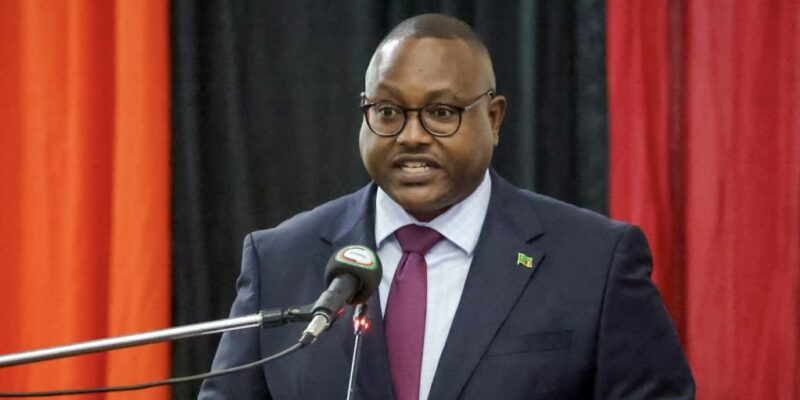
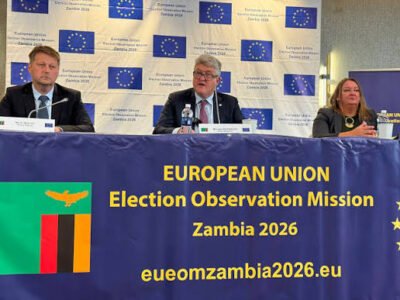
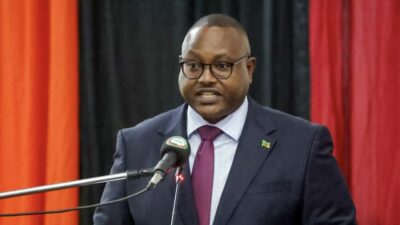
Zambia’s Foreign Affairs Minister, Mulambo Haimbe, said on Saturday a European Parliament resolution on the country’s post-election situation was premature, arguing that it was adopted before the European Union’s election observation mission had issued its final report.
The European Parliament adopted the resolution on September 17 concerning post-election developments in Zambia and the death of Mutotwe Kafwaya.
Haimbe said the resolution was adopted under an urgency procedure without prior engagement with the Zambian government and before publication of the final report of the EU Election Observation Mission.
“Serious determinations concerning a sovereign state should be based on verified facts and informed by engagement with the concerned Government,” Haimbe said in a statement issued from New York.
He said Zambia had asked the EU delegation in Lusaka to convene a formal partnership dialogue with the European Commission and the European External Action Service at the earliest opportunity.
Haimbe said the government regretted the death of Kafwaya on Aug. 14 and that the circumstances surrounding his death were under investigation by police, with independent oversight from the Zambia Human Rights Commission.
“The Government rejects any suggestion of a policy of extrajudicial action and reiterates that the facts will be established through due process,” Haimbe said.
He said Kafwaya’s family had been offered the opportunity to participate in the postmortem examination through a legal representative and an independent pathologist.
On allegations concerning access to justice and treason charges, Haimbe said Zambia’s judiciary was independent under Article 122 of the constitution and that people facing criminal charges were entitled to a fair and impartial trial, due process and legal representation.
He said decisions relating to bail, trial dates and judicial proceedings were made independently by the courts and were not subject to executive direction.
Haimbe also rejected allegations of arbitrary detention, saying arrests and detentions had been conducted in accordance with Zambian law.
“Official records do not corroborate the figures cited in the Resolution regarding detentions,” he said.
On the use of force by law enforcement officers, Haimbe said Zambian law allowed police to use force in certain circumstances, subject to legal safeguards and the principles of necessity and proportionality.
He said it was premature to characterise specific incidents as murder before investigations had been concluded and competent authorities had made determinations.
The European Parliament’s resolution was debated on Sept. 16 and adopted on September 17 under its urgent-resolution procedure.
Haimbe said Zambia remained committed to constitutionalism, the rule of law, fundamental freedoms and its longstanding strategic partnership with the European Union and its member states.
He called on the European Parliament, European Commission, EEAS and other cooperating partners to allow Zambia’s constitutionally mandated institutions to carry out their work independently and without undue influence.
Zambia and the EU have an established partnership dialogue, with the two sides holding a high-level partnership meeting in February that reaffirmed cooperation on political and economic issues.
Haimbe said Zambia would engage relevant European Parliament committees and EU institutions to provide factual clarification on the issues raised in the resolution.
WARNING! All rights reserved. This material, and other digital content on this website, may not be reproduced, published, broadcast, rewritten or redistributed in whole or in part without prior express permission from ZAMBIA MONITOR.





Comments