
 By
By 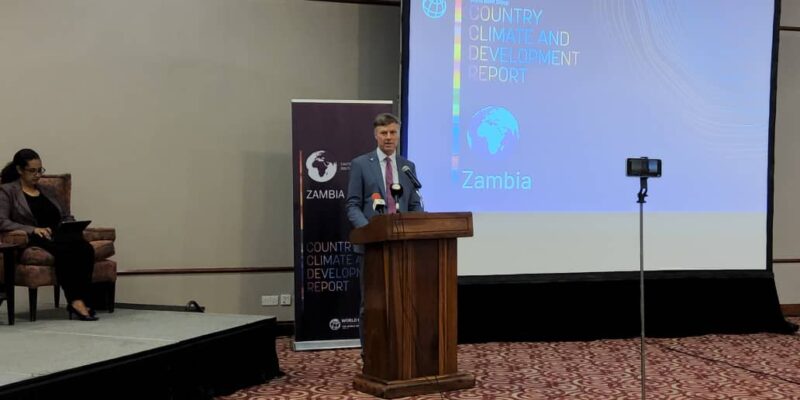
Smart and cost-effective development investments can help Zambia address climate risks and transition to inclusive, private-sector-driven growth, expanding economic opportunities and strengthening resilience, according to a new report by the World Bank Group.
The Zambia Country Climate and Development Report (CCDR) assesses how climate change is affecting the country’s development trajectory and outlines opportunities and practical actions to support inclusive growth, protect livelihoods and build long-term resilience.
Presented in Lusaka on Thursday, the report highlights extreme weather as an increasing constraint on Zambia’s development, with recurrent droughts already disrupting agriculture, hydropower generation and household incomes.
It noted that poor and rural households, whose livelihoods were especially vulnerable, were disproportionately affected by climate-related shocks.
The World Bank said stronger private-sector participation, alongside climate and development finance, was needed to drive progress in key sectors such as agriculture, energy and mining.
It stressed the need for a predictable policy environment, stronger institutions and reduced climate-related risks to unlock an estimated K12 billion in private investment over the next five years.
“Zambia can build resilience through targeted smart investments and policy reforms that will also protect its people, accelerate economic growth, and create jobs,” said Achim Fock.
Dominick De Waal, Senior Economist and co-author of the report, said Zambia must embrace reforms and build robust institutions capable of managing natural resources and attracting private capital. “Translate the reforms into higher living standards to reduce households’ vulnerability to climate risks,” he said.
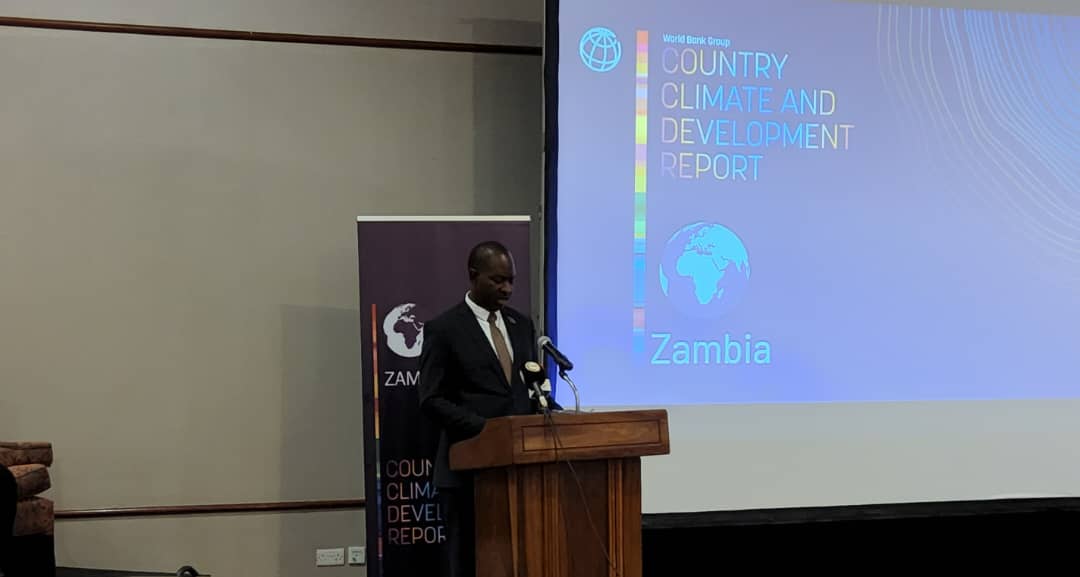
Green Economy and Environment Minister, Mike Mposha, said the report showed that under a business-as-usual scenario, climate change could reduce Zambia’s gross domestic product by roughly 6 percent annually by 2050 while deepening rural poverty.
He said the findings also demonstrated that “there was no trade-off between climate action and development.”
“Therefore, climate-smart reforms are essential for achieving a more resilient, inclusive and higher-growth development pathway. A green growth trajectory is not only possible, it is within our reach,” Mposha said.
He said the government, working with stakeholders, had already taken major steps to strengthen national policy and institutional frameworks, including establishing the ministry, enacting the Green Economy and Climate Change Act, and developing strategic tools such as the Nationally Determined Contribution, the National Adaptation Plan and the National Green Growth Strategy.
“We have also begun mobilising resources to support climate-smart agriculture and to diversify our energy mix, including scaling up investments in solar energy to reduce dependence on hydropower,” he said.
Read More: Zambia secures $30 million climate fund to protect smallholder farmers
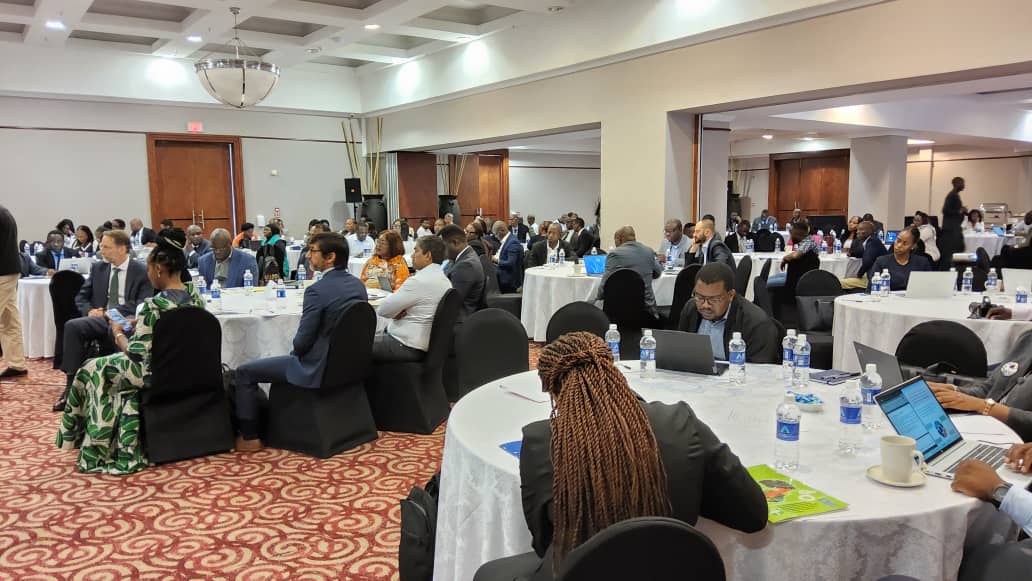 Mposha added that the CCDR now offered an evidence-based roadmap to guide and accelerate further action.
Madalo Minofu, International Finance Corporation Country Manager, said Zambia must strengthen regulatory systems to provide clarity and reduce investor risk, including in areas such as energy tariffs, water allocation and land-use planning.
“We must modernize and digitize systems that investors depend on, such as mining cadasters, permitting processes, or urban development frameworks,” Minofu said.
He urged Zambia to embrace public-private partnerships that channeled private capital into infrastructure while safeguarding public interests.
“Governments should strategically use public funds not to replace private capital, but to derisk it—through guarantees, blended finance, and well-designed incentives that crowd in investment rather than crowding it out,” he added.
WARNING! All rights reserved. This material, and other digital content on this website, may not be reproduced, published, broadcast, rewritten or redistributed in whole or in part without prior express permission from ZAMBIA MONITOR.








Comments